


Start with an assessment

Build · Mobile Apps

Start with the job the app has to do

Most business apps fail for reasons that have nothing to do with code: the app duplicates the website, nobody inside the company owns it, it cannot reach the systems that hold the real data, or it launches without a plan for what happens after launch.

We start by defining the job the application has to do for the customer and for the business, the systems it depends on and who will operate it. Technology choices follow from those answers.

What we cover

  1. Product strategy

    Audience, core jobs, scope for a first release and the roadmap logic for what follows.

  2. UX and UI

    Journeys, states, accessibility and a visual system consistent with the brand across web and app.

  3. Mobile architecture

    Data flow, offline behavior, authentication, notifications and the boundaries between device and server.

  4. Platform decisions

    Native iOS and Android, or a cross-platform framework, chosen against requirements, team and lifetime cost.

  5. Backend and integrations

    APIs, CRM, booking, payments, identity and the operational systems the app depends on.

  6. Analytics

    Event design and measurement agreed before build, so you can see how the product is actually used.

  7. Release readiness

    Store listings, review requirements, privacy disclosures, crash reporting and staged rollout.

  8. Operation and roadmap

    OS updates, dependency maintenance, monitoring and a managed roadmap after launch.

  9. Web and app consistency

    Shared design language, content and account logic, so customers experience one brand, not two products.

Native, cross-platform or web

There is no universally correct answer. Native development offers the deepest platform integration. Cross-platform frameworks can reduce build and maintenance cost when two platforms share most behavior. A progressive web app is sometimes the honest answer when the use case does not need a store presence at all.

We make the recommendation in writing, with the trade-offs stated, after the product definition work, not before.

What we will not promise

We do not promise download numbers, store rankings, review scores or approval timelines. Store review is controlled by Apple and Google, and adoption depends on the product, the market and the distribution behind it. We promise a well-defined, well-built product, a release process that anticipates store requirements, and measurement that tells you what is working.

Operating the app after launch

Apps degrade without attention: operating system releases change behavior, dependencies age, APIs evolve and store policies change. Mobile products are delivered through a Strategic Digital Partnership so that operation, monitoring and the roadmap are part of the relationship from day one.

The operating model

Delivered as a strategic engagement

Mobile applications are delivered through a Strategic Digital Partnership: bespoke implementation from $20,000, with a strategic operating base from $2,500/month covering operation, maintenance and roadmap management. Final scope depends on the product definition.

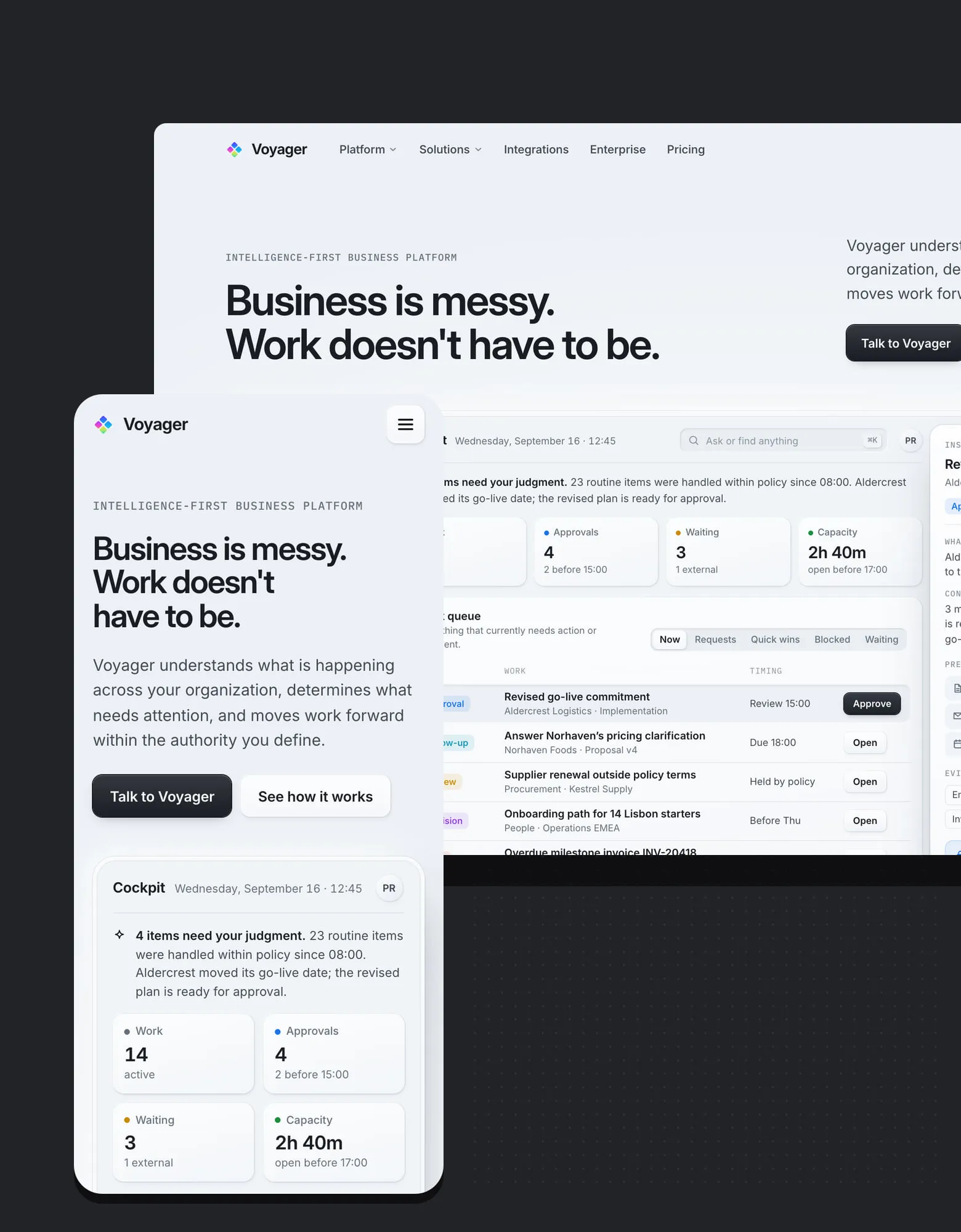
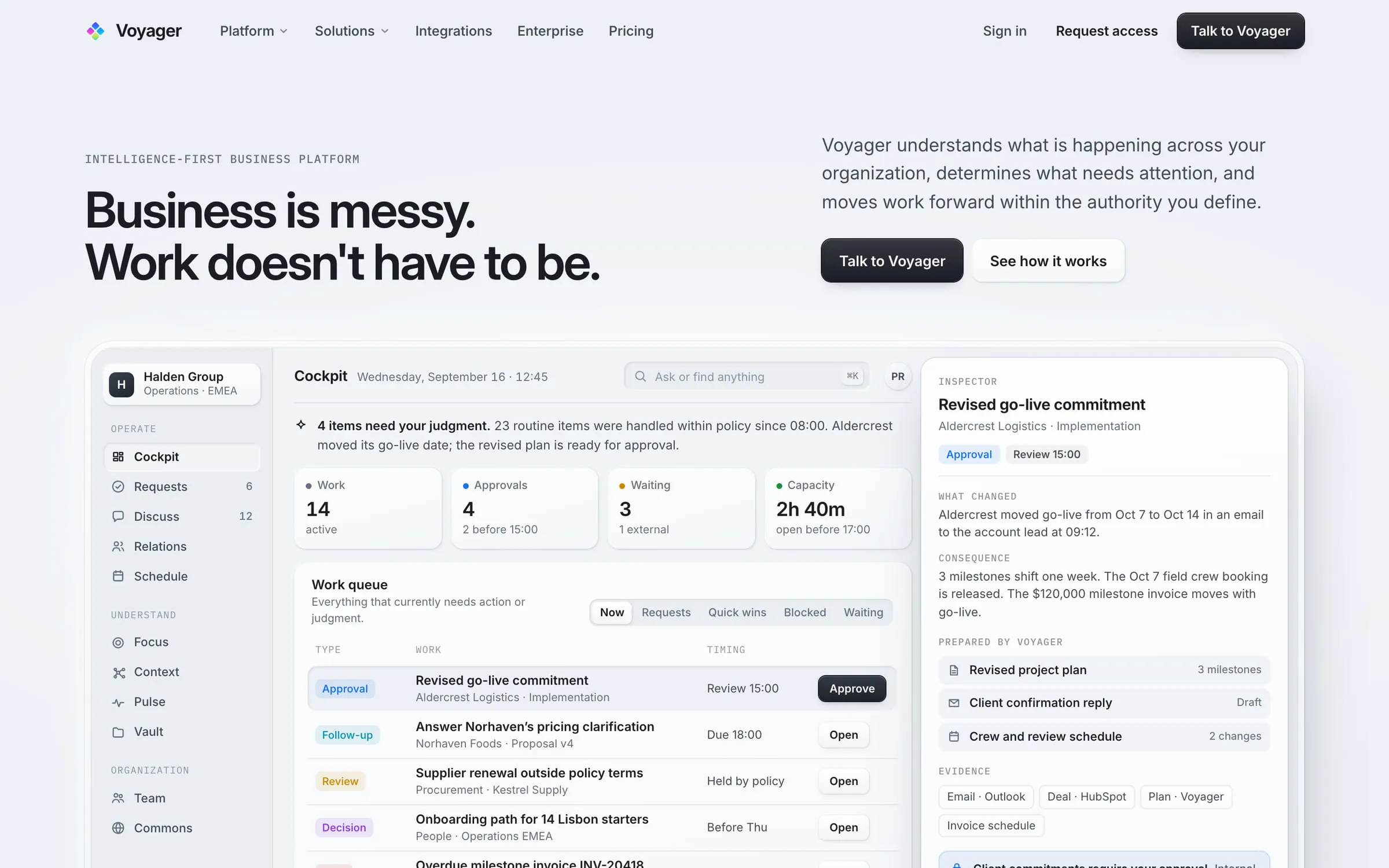
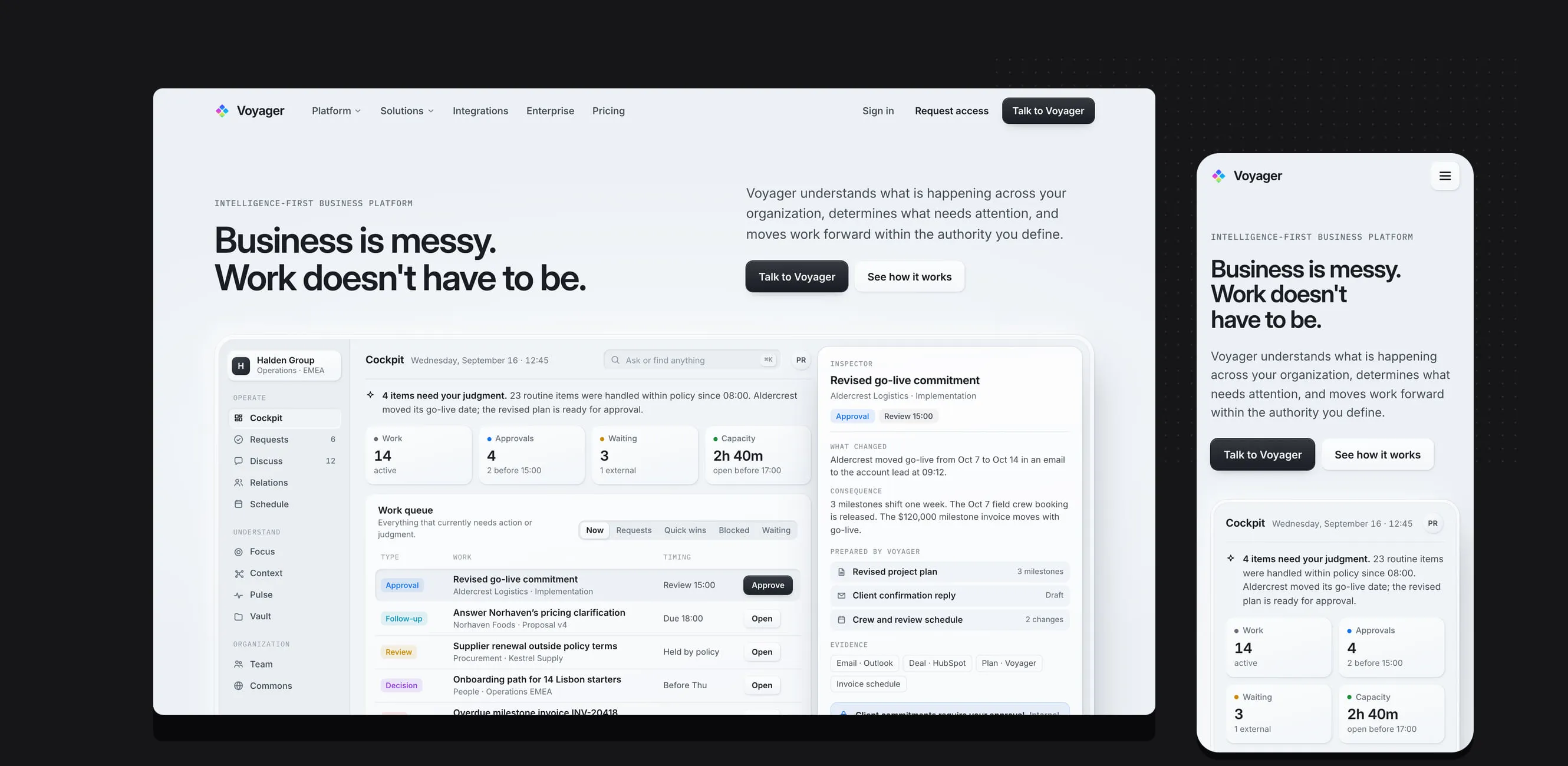
  • Voyager website on desktop and mobile: the homepage headline "Business is messy. Work doesn't have to be." above the product cockpit.

    Voyager

    PRODUCT · UX · WEB · APPLICATION

Buyer questions

How much does a business app cost?

It depends mostly on the number of distinct user journeys, the integrations and whether you need one platform or two. Our buyer guide on mobile app development cost breaks down the drivers honestly.

Do we need an app or a better website?

Often a better website. An app earns its place when customers return frequently, need device capabilities, benefit from notifications or use the product as part of their work. If none of those apply, we will tell you.

Who owns the code and store accounts?

Store developer accounts should be registered to your organization. Ownership of code and assets is defined in the engagement agreement before work starts.

  1. How much does a business mobile app cost?

    The price of an app is set by its journeys, its integrations and what happens after launch, not by the number of screens.

  2. How much should a professional website cost?

    What drives the price, what each level of investment buys, and why the build is only half of the cost that matters.

See what we would change.

Start with a focused assessment of the property you have now. We look at the experience, search visibility, technical condition, conversion path and the opportunities that matter most before recommending scope.